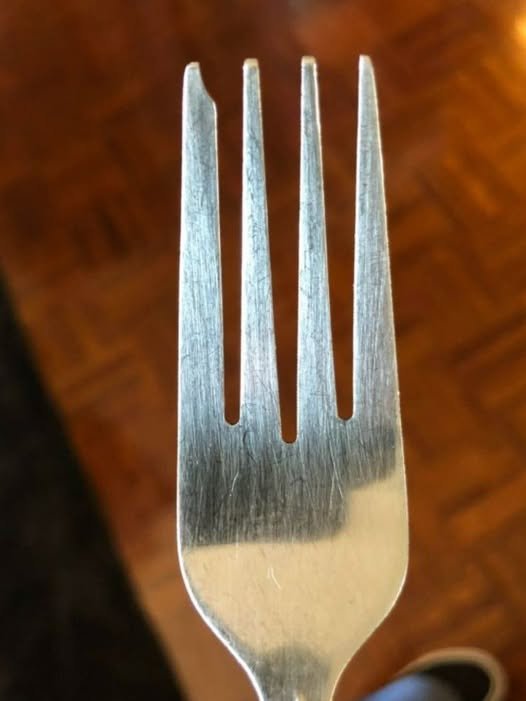
When you look closely at many modern kitchen forks, you might notice a subtle feature that often goes unnoticed: a small “chip,” notch, or indentation in one of the prongs. At first glance, it seems like a minor design quirk, almost decorative. However, this small detail actually serves very practical and clever purposes in the culinary world. In this article, we’ll explore the history, functionality, and practical applications of this little-known kitchen innovation.
The History of the Kitchen Fork
Before we dive into the chip itself, it’s important to understand the evolution of the kitchen fork. The fork as a dining utensil has existed for centuries, with origins tracing back to the Middle East and Byzantine Empire, but it wasn’t commonly used in Europe until the 16th century. Early forks were simple, often two-pronged, and primarily used for holding meat while cutting. Over time, forks evolved in design for both aesthetic and functional reasons, including the introduction of three- and four-pronged forks for improved food handling.
By the 19th and 20th centuries, forks became a standard utensil in kitchens around the world, and manufacturers began experimenting with subtle design tweaks, such as rounded prongs, slightly angled tips, and, importantly, notches or chips in one of the prongs.
The Purpose of the Chip: Functionality Explained
The chip in one prong of a kitchen fork is far from decorative—it’s functional. While it may look like a small imperfection, it serves at least three key purposes in the kitchen:
1. Securing Food While Cutting
One of the primary reasons for the chip is to aid in holding slippery or irregularly shaped foods securely while cutting. For example, when slicing tomatoes, grapes, or boiled eggs, the smooth surface of the fork prongs can sometimes cause the food to slip. The chip provides a slight “grip point,” allowing the fork to anchor into the food and prevent slipping. This makes it much easier to cut with a knife without losing control.
2. Assisting in Peeling or Pitting
Some kitchen forks, particularly those used for fruits like apples, cherries, or olives, incorporate a chip to aid in peeling or removing pits. By angling the fork and using the notch, you can hook the peel or pit and lift it away cleanly. This feature effectively turns an ordinary fork into a multipurpose tool, reducing the need for additional utensils in certain food preparation tasks.
3. Enhancing Precision in Plating
Professional chefs often emphasize precision in plating dishes. The chip allows for greater control when picking up delicate items like pasta, small vegetables, or garnishes. By providing a small indentation where food can rest without slipping, it ensures that the fork can transfer the food neatly from the cooking surface to the plate, enhancing the presentation.
How the Chip Works Mechanically
The chip or notch works because it slightly alters the symmetry and contact points of the fork. A standard prong applies even pressure, which can sometimes allow smooth or rounded foods to slide. The chipped prong interrupts this uniformity, creating a small “catching point.” When the fork is pressed into the food, this catch point bites slightly into the surface, preventing movement.
In simpler terms, think of the chip as a miniature claw or hook. It’s not meant to pierce or tear, but rather to provide stability and control. In professional kitchens, this can make a significant difference, especially when dealing with high-volume plating or delicate ingredients.
Variations in Fork Design
Not all kitchen forks have this feature. Its presence often depends on the intended use of the fork:
-
Salad forks: Some high-quality salad forks feature a notch to help lift slippery greens or small fruits.
-
Fruit forks: Often have pronounced chips to assist in spearing or peeling fruits.
-
Serving forks: Larger serving forks may incorporate subtle chips to prevent delicate foods like roasted vegetables or pasta from sliding off during serving.
-
Everyday forks: In most standard table forks, the chip may be less noticeable or omitted entirely, as the primary focus is general dining rather than specialized food handling.
The Chip vs. Other Fork Innovations
The chip is just one example of subtle kitchen utensil engineering. Similar innovations include:
-
Serrated prongs: Some forks have serrated edges to help cut through soft foods.
-
Angled prongs: Slightly angled prongs improve leverage and food pickup.
-
Hollow prongs: Reduce suction when lifting foods like noodles or spaghetti, preventing sticking.
The chip differs because it doesn’t fundamentally change the fork’s shape or aesthetic. Instead, it enhances functionality without adding complexity, making it an elegant solution to a common problem.
Benefits for Home Cooks and Professionals
The chip may seem minor, but it offers tangible benefits:
-
Efficiency: Reduces time spent adjusting or repositioning slippery foods.
-
Precision: Helps maintain the integrity of delicate ingredients.
-
Versatility: Can aid in peeling, pitting, and even serving.
-
Ergonomics: Reduces hand strain when trying to secure difficult-to-hold foods.
Professional chefs often choose their utensils with these small advantages in mind. For home cooks, understanding the chip’s purpose can improve everyday kitchen experiences, from making salads to preparing intricate appetizers.
Caring for Forks with Chips
Because forks with chips are slightly specialized, they require normal care to maintain functionality:
-
Avoid bending: The prong with the chip is often slightly thinner or more delicate, so avoid applying excessive force.
-
Hand washing recommended: Dishwashers are usually safe, but hand washing can prevent the chip from wearing down over time.
-
Check for debris: Food can sometimes lodge in the notch, so clean carefully after use.
Proper maintenance ensures that the chip continues to serve its purpose for many years.
Fun Fact: Marketing and Misconceptions
Some manufacturers market forks with a prong chip as “multi-purpose” or “innovative,” which can confuse consumers who don’t understand the subtle functionality. The chip is not a defect, nor is it purely decorative—it’s an intentional design choice meant to improve your cooking experience.
Interestingly, antique or vintage forks sometimes had more pronounced notches, especially in European designs, reflecting older methods of food handling. Today, the modern fork’s chip is usually minimal, blending seamlessly with the overall design.
Conclusion
Next time you pick up a kitchen fork and notice a tiny chip in one prong, remember that it’s not a flaw—it’s a thoughtful feature designed to make cooking and dining easier. From improving grip on slippery foods to assisting in peeling, pitting, or precise plating, the chip enhances the fork’s functionality in ways that may go unnoticed until you use it intentionally.
Understanding these small details in kitchen tools highlights how thoughtful design can make everyday cooking tasks smoother, more efficient, and even more enjoyable. The next time you prepare a salad, slice a tomato, or plate delicate pasta, take a closer look at your fork—you might be surprised at how much difference a tiny chip can make.