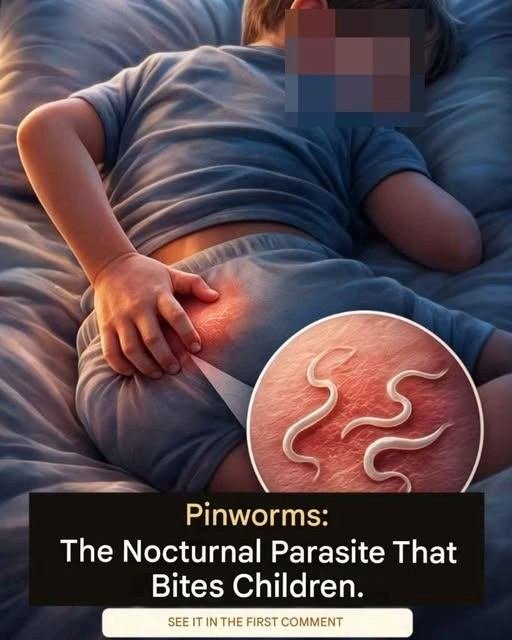
Enterobius vermicularis is a small, white intestinal nematode (roundworm) that commonly infects humans, particularly children. The infection is called enterobiasis and is one of the most common helminth infections worldwide.
Transmission occurs via the fecal-oral route, often through contaminated hands, bedding, clothing, or food. Eggs are very hardy and can survive on surfaces for up to 2–3 weeks.
Symptoms
The hallmark symptom of pinworm infection is perianal itching, especially at night. This occurs because female worms migrate from the colon to the perianal area to lay eggs, causing irritation.
Other symptoms may include:
- Nocturnal perianal itching (worse at night)
- Restlessness or disturbed sleep
- Irritability in children
- Abdominal discomfort or mild pain
- Nausea (rare)
- Secondary bacterial infection due to scratching
- Occasional vulvovaginitis in girls if worms migrate to the genital tract
In many cases, the infection is asymptomatic, especially in adults.
Diagnosis
Diagnosis is usually clinical, based on symptoms and history, but can be confirmed by:
- Tape test (Scotch tape test): Pressing transparent tape against the perianal area in the morning to collect eggs for microscopic examination.
- Direct visualization of worms: Occasionally, adult worms can be seen around the anus, especially at night.
- Stool examination: Rarely useful, as eggs are laid perianally rather than in feces.
Treatment
Treatment aims to eradicate the worms and prevent reinfection. Common anti-helminthic drugs include:
- Mebendazole
- Dose: 100 mg orally single dose, repeat in 2 weeks
- Mechanism: Inhibits microtubule synthesis in worms
- Albendazole
- Dose: 400 mg orally single dose, repeat in 2 weeks
- Effective against adult worms and eggs
- Pyrantel pamoate (OTC in some countries)
- Dose: Single dose based on weight, repeat in 2 weeks
Important: All household contacts should be treated simultaneously due to high transmissibility.
Adjunct Measures
- Hygiene: Frequent handwashing, especially before meals and after using the toilet
- Nail care: Keep nails short and clean to reduce egg spread
- Clothing and bedding: Wash underwear, pajamas, bed sheets, and towels in hot water
- Morning cleaning: Wash the perianal area in the morning to remove eggs
Complications (Rare)
- Secondary bacterial infection from scratching
- Vulvovaginitis in girls
- Appendicitis (rare, if worms enter appendix)
Summary Table
| Feature | Details |
|---|---|
| Causative organism | Enterobius vermicularis (pinworm) |
| Transmission | Fecal-oral route, contaminated surfaces |
| Key symptom | Nocturnal perianal itching |
| Other symptoms | Restlessness, abdominal discomfort, irritability |
| Diagnosis | Tape test, direct visualization |
| Treatment | Mebendazole, Albendazole, Pyrantel pamoate |
| Prevention | Hand hygiene, nail care, wash bedding/clothing, treat household contacts |