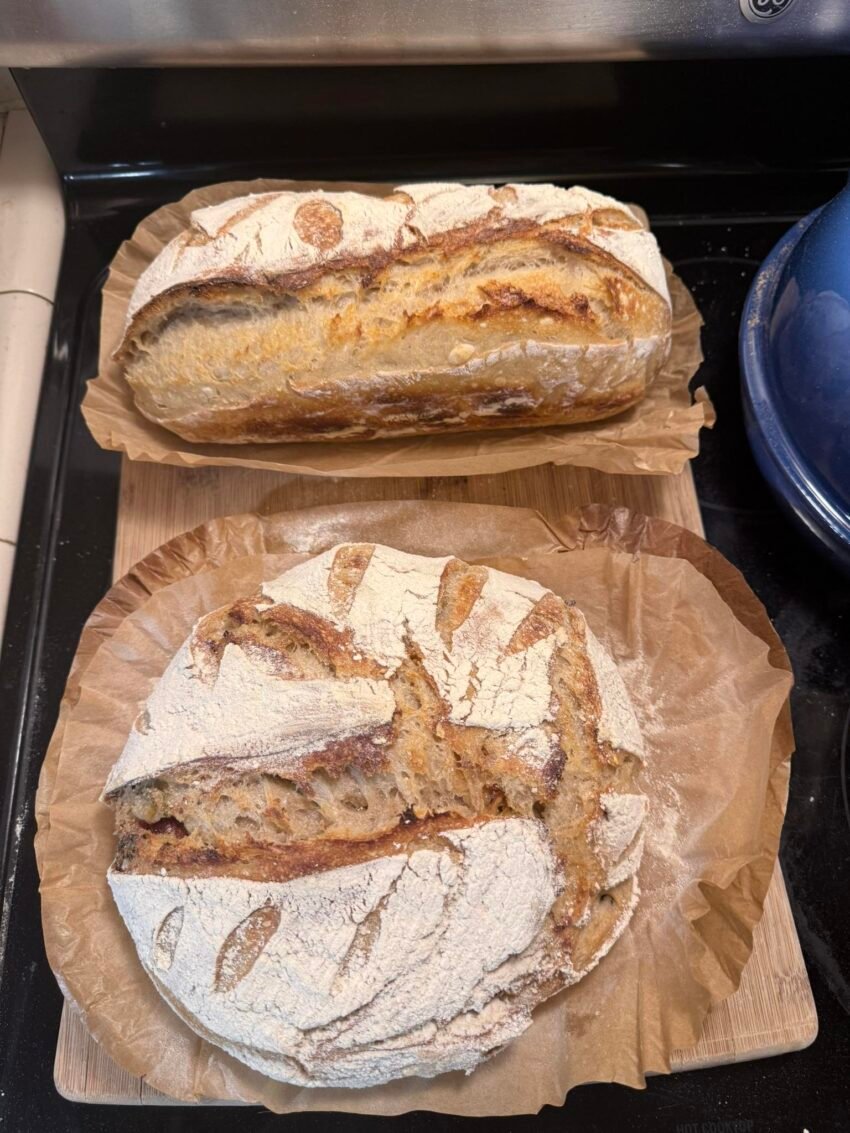
Sourdough bread is one of the oldest and most beloved types of bread in the world. Known for its tangy flavor, chewy texture, and crisp crust, sourdough is made using a natural fermentation process rather than commercial yeast. This traditional technique uses a sourdough starter—a mixture of flour and water containing wild yeast and beneficial bacteria—to help the dough rise and develop its signature taste.
Unlike many modern breads, sourdough takes time and patience. The slow fermentation process enhances flavor, improves texture, and makes the bread easier to digest for many people. The result is a loaf with a golden, crunchy crust and soft, airy interior, perfect for sandwiches, toast, or simply enjoying with butter.
Making sourdough bread at home may seem intimidating at first, but with the right steps and a little practice, anyone can create a beautiful, bakery-quality loaf.
Why You’ll Love Sourdough Bread
Rich Flavor: Natural fermentation creates a complex tangy taste.
Better Texture: Chewy interior with a crisp, crackly crust.
Natural Ingredients: Made with simple ingredients—flour, water, salt, and starter.
Versatile: Perfect for toast, sandwiches, or dipping into soups and stews.
Ingredients
-
3 ½ cups bread flour (or all-purpose flour)
-
1 ¼ cups warm water
-
¾ cup active sourdough starter
-
1 ½ teaspoons salt
Optional:
-
Rice flour or cornmeal for dusting
-
Extra flour for shaping
Step-by-Step Instructions
1. Mix the Dough
In a large bowl, combine the sourdough starter and warm water. Stir until the starter dissolves.
Add the flour and salt, mixing until a rough dough forms. The dough will look slightly sticky and shaggy at first, which is normal.
Cover the bowl and let the dough rest for 30 minutes. This step, called autolyse, allows the flour to absorb water and begin developing gluten.
2. Knead or Stretch the Dough
After resting, knead the dough for about 8–10 minutes until it becomes smoother and elastic.
Alternatively, you can use the stretch-and-fold method. Every 30 minutes for the next 2 hours, gently stretch the dough and fold it over itself in the bowl. This technique strengthens the dough without heavy kneading.
3. First Rise (Bulk Fermentation)
Cover the bowl with a damp cloth or plastic wrap and let the dough rise at room temperature for 4–6 hours, or until it roughly doubles in size.
The exact time may vary depending on room temperature and the strength of your sourdough starter.
4. Shape the Dough
Once the dough has risen, gently turn it onto a lightly floured surface. Shape it into a round loaf or oval shape by folding the edges inward and creating surface tension.
Place the shaped dough seam-side up in a lightly floured proofing basket or bowl lined with a floured towel.
5. Second Rise
Cover the dough and allow it to rise again for 1–2 hours at room temperature, or refrigerate overnight for a slower fermentation that deepens flavor.
6. Preheat the Oven
Preheat the oven to 450°F (230°C). If possible, place a Dutch oven or heavy baking pot inside while the oven heats.
A preheated pot helps create steam, which gives sourdough its crisp crust.
7. Bake the Bread
Carefully place the dough onto parchment paper and score the top with a sharp knife or bread lame.
Transfer the dough into the hot Dutch oven, cover with the lid, and bake for 20 minutes.
Then remove the lid and bake for another 20–25 minutes until the crust is deep golden brown.
8. Cool Before Slicing
Remove the bread from the oven and place it on a wire rack. Let it cool for at least 1 hour before slicing.
This resting time allows the crumb structure to set properly.
Serving Suggestions
Fresh sourdough bread can be enjoyed in many ways:
-
Toasted with butter or jam
-
Used for sandwiches or grilled cheese
-
Served with soups and stews
-
Dipped in olive oil and balsamic vinegar
-
Made into sourdough French toast
Its slightly tangy flavor pairs well with both savory and sweet toppings.
Tips for Perfect Sourdough
Use an Active Starter: Your starter should be bubbly and recently fed.
Be Patient: Sourdough relies on natural fermentation, which takes time.
Use High Heat: Baking at a high temperature helps create a crisp crust.
Score the Dough: This allows the bread to expand properly while baking.
Storage and Reheating
Sourdough bread stores well when handled properly.
Room Temperature: Keep in a paper bag or bread box for up to 3 days.
Freezer: Slice and freeze for up to 2 months.
Reheat: Toast slices or warm the loaf briefly in the oven.
Avoid storing sourdough in the refrigerator, as it can dry out more quickly.
Final Thoughts
Sourdough bread is a timeless classic that celebrates the beauty of simple ingredients and traditional baking techniques. With its crisp crust, chewy interior, and naturally tangy flavor, it’s a bread that stands apart from ordinary loaves.
While making sourdough requires patience and care, the reward is a homemade loaf that tastes fresh, wholesome, and deeply satisfying. Once you master the process, baking sourdough can become a relaxing and rewarding kitchen tradition.