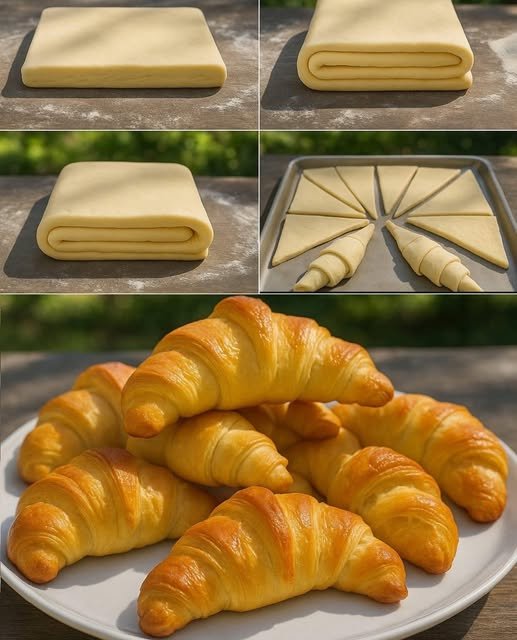
This classic French pastry is all about layers—thin sheets of dough and butter folded together to create that signature airy texture. Once you master the process, you’ll never look at store-bought croissants the same way again.
Why You’ll Love This Recipe
Homemade croissants are a true labor of love, but the reward is absolutely worth it. Each bite delivers a delicate crunch on the outside and a soft, buttery interior. This recipe walks you through every step, making it approachable even for beginners.
You’ll also have full control over the ingredients, ensuring freshness and quality. Plus, the dough can be used to make variations like chocolate croissants or almond croissants.
Ingredients
For the Dough:
- 500 g all-purpose flour
- 60 g sugar
- 10 g salt
- 10 g instant yeast
- 300 ml cold milk
- 40 g unsalted butter (softened)
For the Butter Layer:
- 250 g unsalted butter (cold but pliable)
For Egg Wash:
- 1 egg
- 1 tablespoon milk
Preparing the Dough
In a large mixing bowl, combine flour, sugar, salt, and yeast. Add the cold milk and softened butter, then mix until a dough forms. Knead for about 8–10 minutes until smooth and elastic.
Shape the dough into a rectangle, wrap it in plastic, and refrigerate for at least 2 hours (or overnight). Chilling the dough helps relax the gluten and makes rolling easier.
Preparing the Butter Block
Place the cold butter between two sheets of parchment paper. Use a rolling pin to flatten it into a rectangle about 1 cm thick. Keep it chilled but flexible—you should be able to bend it slightly without cracking.
Laminating the Dough
Roll the chilled dough into a larger rectangle. Place the butter block in the center and fold the dough over it like an envelope, sealing the edges.
Now begin the folding process:
- Roll the dough into a long rectangle.
- Fold it into thirds (like a letter).
- Wrap and refrigerate for 30–45 minutes.
Repeat this process 3 times. These folds create the layers that make croissants flaky.
Shaping the Croissants
After the final chill, roll the dough into a large rectangle about 4 mm thick. Cut into long triangles.
To shape:
- Make a small slit at the base of each triangle
- Roll tightly from base to tip
- Curve slightly to form a crescent shape
Place the shaped croissants on a baking tray lined with parchment paper.
Proofing
Cover loosely with a cloth and let the croissants rise at room temperature for 1.5–2 hours, or until doubled in size. They should look puffy and slightly jiggly when ready.
Baking
Preheat your oven to 200°C (390°F). Brush the croissants gently with egg wash.
Bake for 15–20 minutes, or until deep golden brown and crisp. Rotate the tray halfway through for even baking.
Cooling and Serving
Allow the croissants to cool slightly before serving. Enjoy them warm for the best texture and flavor.
Serve with:
- Butter and jam
- Honey or Nutella
- Fresh fruit and coffee
Tips for Perfect Croissants
- Keep everything cold: The butter should never melt into the dough.
- Be patient: Resting times are essential for proper layering.
- Don’t overwork the dough: This can make croissants tough instead of tender.
- Use high-quality butter: It makes a huge difference in flavor.
Variations
- Chocolate Croissants (Pain au Chocolat): Add chocolate sticks before rolling.
- Almond Croissants: Fill with almond cream and top with sliced almonds.
- Savory Croissants: Add cheese, ham, or herbs inside before shaping.
Storage and Reheating
- Store in an airtight container for up to 2 days
- Reheat in oven at 180°C (350°F) for 5–7 minutes
- Freeze unbaked croissants and bake fresh when needed
Final Thoughts
Homemade flaky croissants are a rewarding baking project that transforms simple ingredients into something truly special. While the process requires time and care, the results are nothing short of spectacular.
Once you experience the buttery layers and crisp exterior of a freshly baked croissant, you’ll understand why this pastry has become a beloved classic around the world.
Take your time, enjoy the process, and savor every bite of your homemade creation.